
OFFSPRING
‘A CHILD" OR "THE PRODUCT, RESULT OR EFFECT OF SOMETHING’
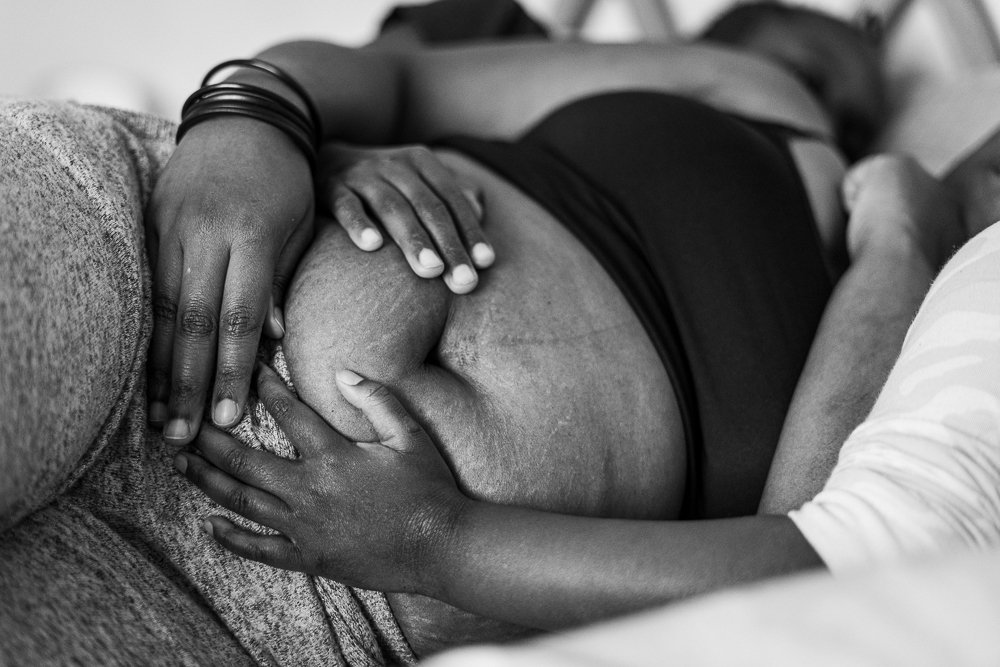
Offspring is a project that explores the physical and psychological changes that occur during the transition into motherhood, from the perspective of Black mothers in the UK. Photographs of more visible physical changes, such as stretch marks, wrinkles, scars, or mementoes of early motherhood, serve as a backdrop for visualising and discussing less obvious physiological shifts and mental health experiences that are often taboo or swept under the carpet.
The objective is to create space for mothers at any stage of their journeys to share their stories without fear of judgement, with anonymity preserved throughout. The resulting body of work is a collection of images accompanied by text from mothers of diverse backgrounds who, despite experiencing these changes, are often culturally stifled into silence and unable or unwilling to share. The process of storytelling is not only cathartic for the mothers involved but also reveals diverse realities of Black motherhood to a wider audience
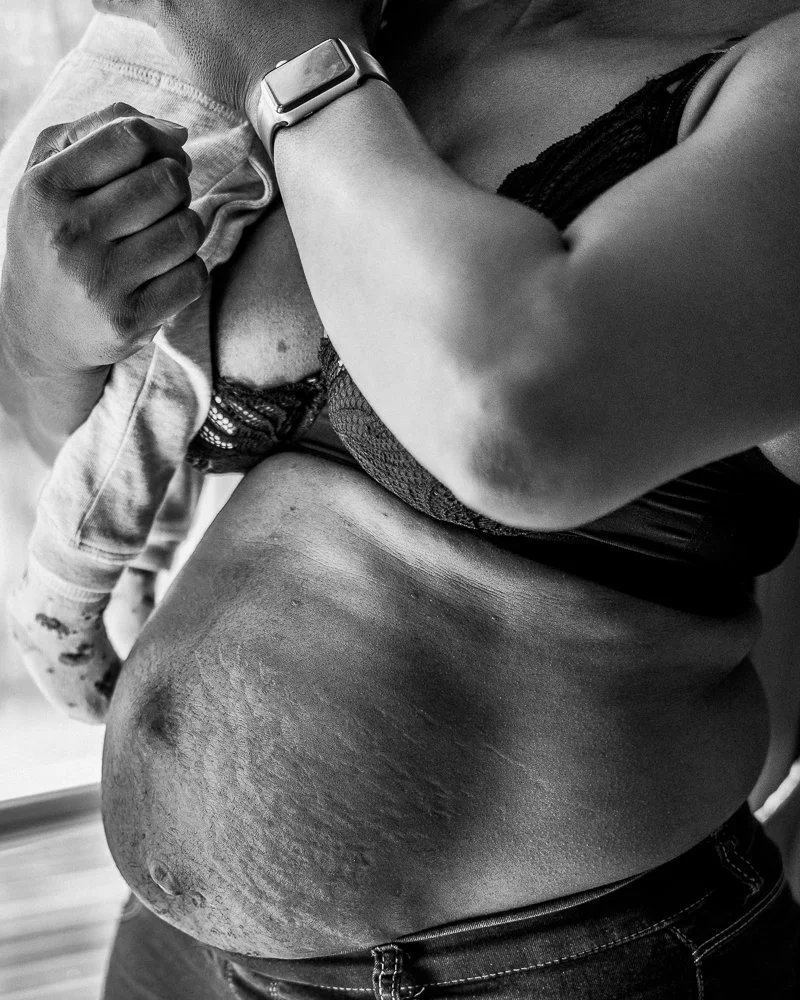
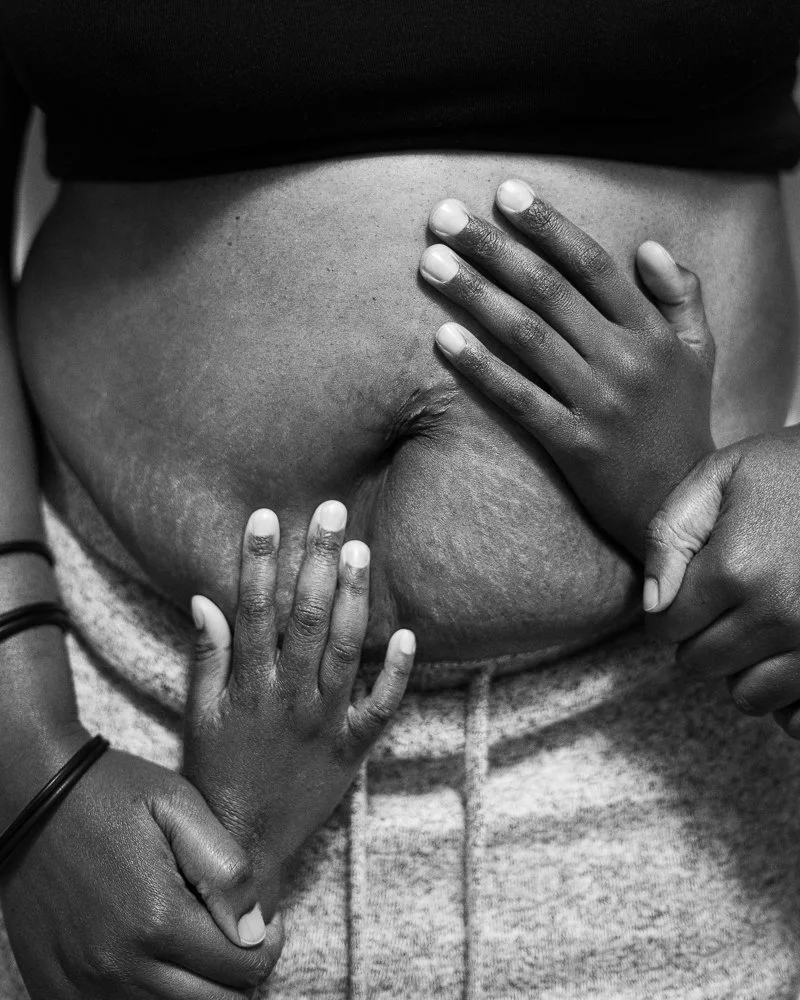
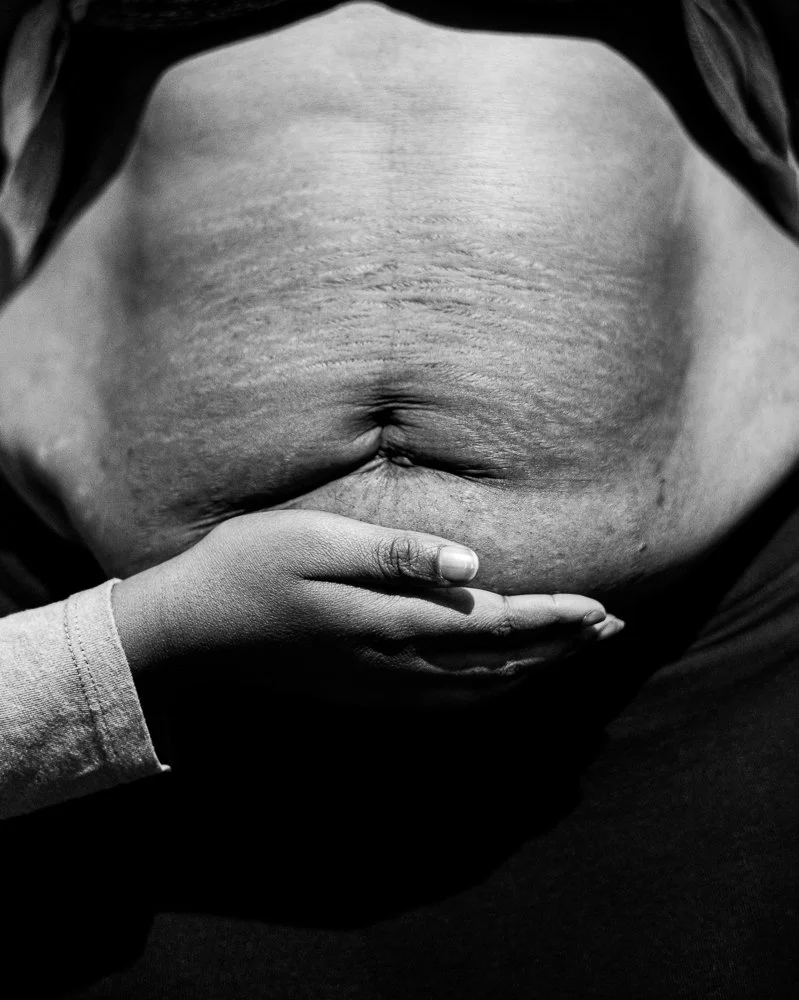

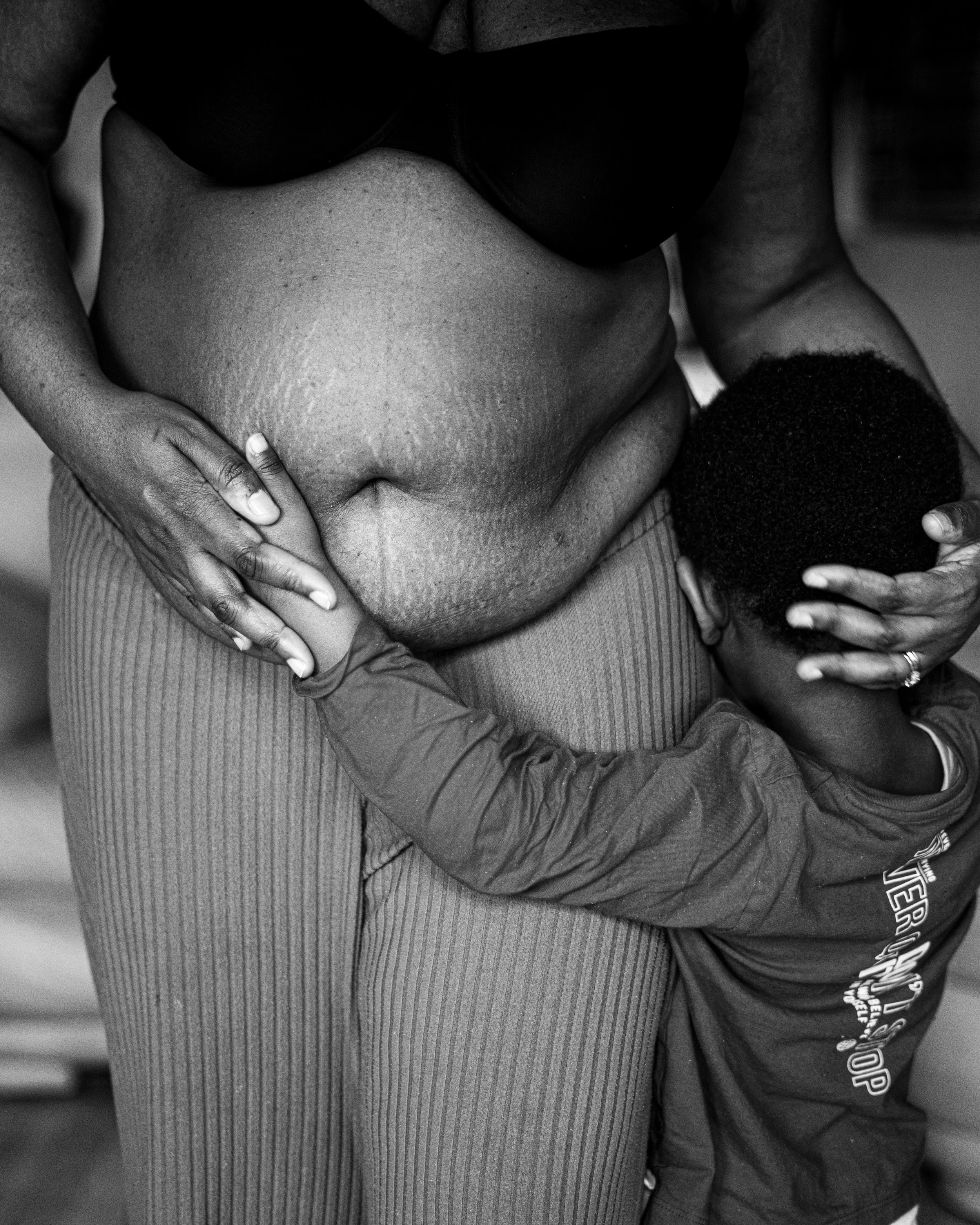
One mother’s story…
I am a proud mum of two, a nineteen-year-old and a three-year-old. Before them, motherhood didn’t interest me. I saw children as weight, and all I wanted was to live my life untethered. I remember my mum saying it was because I hadn’t found the right person yet, and she was right.
When I met my older child’s father, my emotions and maternal instinct took over and shortly after, she was born. The plan was to get married after she arrived, but things didn’t work out between us. Years later, I met my husband, who loved us and accepted my daughter as his own. Once again, it felt like a switch had flipped and I wanted to have his children. Being a very traditional man, he wanted me to meet his family and be married first. The formality and security of the process was something I hadn’t realised I needed until I experienced it. It felt like home.
My first pregnancy was easy. I had no complications, aside from discovering that I carried the sickle cell trait. I had no idea pregnancy could be so complex until I started trying to conceive again. I experienced four miscarriages, one stillbirth, and another miscarriage before my three-year-old son was born.
To say the stillbirth was life-changing is an understatement. I knew something wasn’t right with the pregnancy. It felt like the baby was dropping, but my concerns were dismissed as ‘normal.’I also suffered from Hyperemesis Gravidarum (HG) and wasn’t taken seriously. I remember one particularly awful episode when paramedics came to my home and didn’t know how to treat me because they assumed it was morning sickness. At the time, I wasn’t aware of potential complications such as pre-term labour or contractions constricting the baby’s airway.
The labour lasted eighteen hours. My body wasn’t cooperating and my waters had to be broken by the midwife. It later became clear that the heavy, dropping sensation I had felt throughout pregnancy was my cervix opening. Having to bury our baby was devastating.
As a Black mother, I often feel I have to fight harder for my voice to be heard. After repeated miscarriages, my husband and I conducted extensive research that led to the discovery of ovarian cysts. We consulted three doctors with very different approaches. The first wanted to remove the ovary entirely, without properly addressing our concerns. The second recommended leaving the cyst, which was unacceptable given my quality of life. The third doctor listened. She explained that she would attempt to remove only the cyst, but if the situation was severe, the ovary might have to go. In the end, she removed just the cyst, and we were able to conceive our son.
Had you asked me how I felt about life and motherhood during that time, I would have spoken from a place of deep sorrow. But those experiences changed me. I now see life for the miracle it is.
Supported by Grand Plan Fund.